
Why Is Divorce So Hard?

This article was written by Freya Robbins
Divorce Is Emotional.
No doubt, most people would agree that no divorce is easy. Would you agree, though, that it is all a matter of perspective? Is fighting all cancer hard? Yes, for the most part. As a survivor of both cancer and an adversarial divorce I would prefer fighting cancer over enduring a litigated divorce. Cancer is rated in terms of stages, and one could rate divorce in stages as well.
Let’s look at the many factors that makes divorce hard.
Divorce is a death. It’s a death of:
- The hopes and dreams you had when you got married.
- The vision of the house with the “white picket fence.”
- The plans to retire together
- Raising a happy family together
- Enjoy life in your retirement years doing what you love together or traveling perhaps.
Dealing with divorce is a grieving process. Yes, that is true, and that can be hard because we want to avoid the pain. Divorce causes us to be emotional. Many people, especially men do not want to be viewed as emotional. Nor do they want their soon to be ex-spouse seeing them being emotional. Many women do not want to be emotional either. I think the emotional part of divorce is one of the most difficult aspects of the divorce process. As humans, we do not like change, even if that change could be for the best; but regardless it is still a tough decision to divorce that isn’t taken lightly. We do not like to deal with hard things that make us feel sad or upset.
As we break down the emotional element of divorce, we can go down many paths:
- These emotions can affect our finances in terms of our confidence to provide for ourselves and our family in the future or even our ability to manage paying bills and keeping track of the finances and investments if we have never done that before.
- It can affect our children in terms of how they will react to the divorce and our relationship with them, their self-esteem.
- Divorce can affect our livelihood in terms of how we can maneuver the divorce process and keep our focus on our career.
- A divorce will likely affect our confidence in considering dating again.
- Our faith, our identity as a new single person and every relationship that we have ever had, so yes; just about everything can be affected by the emotions that run through us in a divorce.
This is all assuming that we have actually agreed to a divorce! What if someone does not want a divorce? Or what if you aren’t sure if a divorce is the right thing for you and your spouse? Making the decision to divorce is very hard.
- We either resist the idea entirely (which often times upsets the spouse who wants it)
- Or we want to make sure we have tried everything before calling it quits (which may involve couples or family counseling)
- Or sometimes (many times) we just want it over.
Just wanting it over ASAP is something I often see when people hurt so bad and they don’t know how to handle those emotions, that they just want to stop the hurt feelings. Although I understand the feeling of wanting it over and not wanting it to hurt, I don’t believe that rushing through something as comprehensive and life affecting as a divorce is a wise thing to do.
There is no way around it the only way is through!
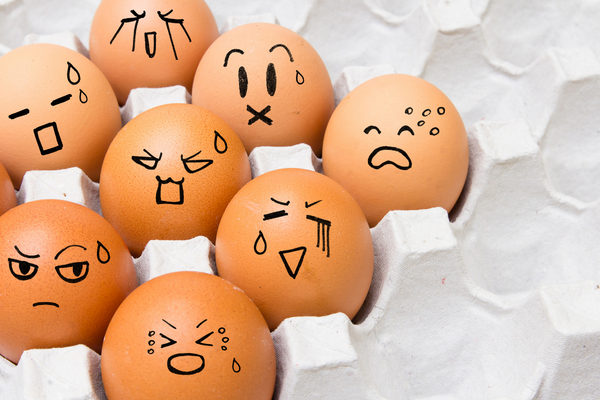
Know Your Emotional Triggers.
Why does he upset me so much? Why do you allow him to upset you?
No one can upset us unless we allow them to. I recall discussing with my son when he was young and in his frustration, he said that “someone made him mad” and I replied, “Oh, so anyone can make you mad? Anyone can have that much power over you?” We all know that being mad is a choice, isn’t it? Well so is allowing someone to upset us.
So, take a deep breath and breathe out the “upset” and replace it with “comfort and peace”.
When you’re going through the divorce process along with the grieving process you can have good days and bad days, you will have days where your spouse (who probably knows you better than anyone) is pushing your buttons to get a reaction. Take the high road, be the bigger person and hope that they will eventually begin to mirror your behavior.

We All Have Baggage.
The more dysfunctional our childhood was, the more baggage we bring to each relationship.
- Baggage should not be thought of as negative; it just is what it is.
- Baggage is experience.
- The word baggage is typically viewed as a negative and not a positive, but our experience can also be positive.
And yes, if our childhood was tumultuous then our adult lives are likely to be challenged as well. Unless of course, we have had a lot of counseling and worked on ourselves. Knowing the baggage, you bring to a relationship is important, having those conversations with your spouse and know what things you need to work on individually and as a couple can be crucial and often, I see couples who never communicated with each other about this and are at a crossroads of what decisions to make for the future.
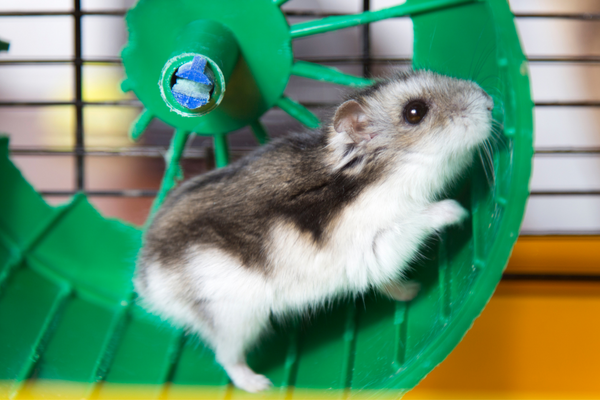
I Feel Like We Are in a Vicious Cycle.
Does this feel like a Deja vu moment? Have you had this argument or difficult conversation before, and do you feel like you are at the same place on a different day (or perhaps year)? Couples often feel like they are the rat in a wheel with their differences until one of you decides to get off the wheel.
That means you must do something different than what you have been doing. That can take guts!
Or you can keep spinning around until you feel dizzy. If you haven’t been to a counselor now might be a good time. And if your mate won’t go, you can go alone. You will feel so much better especially for taking care of yourself. Taking care of ourselves allows us to understand ourselves better and be able to share those insights with our loved ones, if your cup is full you can pour into others, but if you are running on empty and there’s nothing in your cup to give, that can set a chain reaction off for disaster.
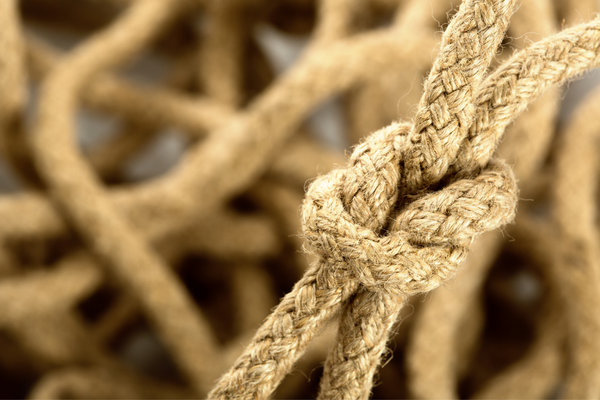
Unwinding Unhealthy Ties.
You may feel like there is a similar pattern that you have experienced before. Maybe with a different partner, or perhaps something with a work relationship or even likely with a family member. Once we realize something is “off” about a relationship, we can often see similarities with other relationships. Identifying those patterns is the first step, uncovering what attracts you to those things and healing the cycle is what helps us come to a healthy place. When it comes to unwinding unhealthy ties in a marriage, there is a high probability that the patterns or trauma you have stem from a much younger age and are things you have never worked through or been able to communicate. Just like when we start a family and create new memories and traditions, when we go through a divorce, we unwind the things we have created and can be faced with creating something new and different all together.

Kids Add Another Layer of Concern.
Most of us have genuine concern about our children. Children should be a reason to be concerned. They are so precious and are often the ones in the middle of our good and bad behavior. Unfortunately, too much of the behavior between separating spouses is bad and no child should have to experience that. If you are trying to punish your spouse by pitting your child against him or her—STOP!
You are at risk of ruining your relationship with your children. Yes, even if your spouse is also doing bad things and making mistakes. Your child should not be a part of your frustration towards your spouse, remember your children are a part of both of you and can feel as if your frustrations carry to them because they have the same characteristics or look like one parent or another. Our children should be protected from the anger and rancor between their parents. It breaks my heart to hear of situations where one spouse is trying to take it out on the other spouse by venting through their children.
If you love your children, and I am sure you do, you will heed this and do everything to keep your children from the negativity that can surround separation and divorce, keep in mind your kids are kids, you are the adult, and it is your responsibility to help them navigate through this transition. Yes, you are probably hurting your spouse, but keep in mind you are damaging your children permanently far more than you will ever hurt your spouse. Your children did not cause this. The couple’s problems are not your children’s fault, and they should not suffer for your issues. Please share this view with your well-meaning friends and family members too. Protect your children, please at all costs.
Children make divorce harder because you care for them, because you must be financially, physically, and emotionally responsible for them. Children are a huge reason why divorce is so difficult, but it is still not their fault. You may be worrying if it is better to stay since your children are young. That is a decision that must be made individually (counseling might help you decide this) as each family’s situation is different. Your children need to see you stable, happy and healthy. If you are not stable, your children pick up on that and can become fearful. It is not healthy for children to witness abuse from one parent to another. Don’t be afraid to remove yourself and your children from an abusive or toxic situation. There are safe places for you and your children to go for those situations. Keep a bag ready in case you need to leave in a hurry. Call 911 if you feel you are in danger.
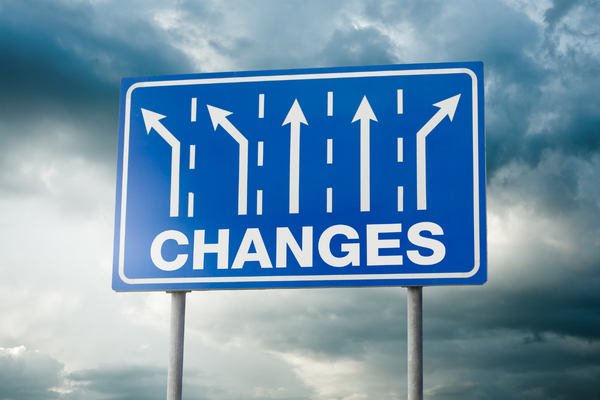
We Don’t Like Change.
Most of us are creatures of comfort. Who likes change anyway? Some personality types don’t handle change as well and other people who are more flexible. The very thought that our life could change can bring us to our knees. Even if we know the change can be positive, we are likely to resist that change. Why do people return to an abusive environment instead of leaving? It is because we are comfortable with the status quo. We would rather stay with what we know than move toward something different or the unknown. That is the nature of the human being. Since we are now aware of that, it is important for us to know when we need to make a change for our mental health or for our physical safety.

What if One of Us Still Wants the Marriage?
In most cases, not all, but in most marriages, there is one spouse that wants the divorce and the other one wants to hold on for dear life. What do you do then? How do you move forward when one person is stuck in the mud and won’t budge? Time can help, but the first thing that would be the most help is to engage in marital counseling or marital mediation. Counseling will allow you to talk about your past and childhood issues, whereas marital mediation will help you focus more on today and the future, instead of the past. Hearing that your partner no longer wants to be with you is hard to hear at any stage of a relationship, that part never gets easier, but do you want to be with someone who doesn’t want to be with you?
Marriage mediation can be an alternative option to help you decide whether to stay married or get a divorce if you’re unsure of which route to go to help you sort through the underlying issues. Feeling like the grass is greener on the other side? Marriage mediation can help give you a glimpse of what life might look like if you did decide to get a divorce both financially and emotionally.
Society and Guilt.
Societal norms and constructs tend to put us into boxes of what we should and should not do. There can be a lot of guilt surrounding the topic of marriage and divorce with a lot of unsolicited advice and comments from well meaning friends, family, and colleagues. At a young age you are taught that marriage is for life and if you deviate from that, you can be viewed as bad or wrong. In the end you have to answer to your own set of morals and standards and choose what is best for you and your family. Remember, every family is unique and there is nothing saying you have to do things like everyone else does.
If you are questioning divorce or marriage Zollinger Mediation is a great resource to help you sort through the process. Schedule your free phone consultation here.