
Video | P.E.A.C.E Through Divorce: Step by Step Planning for a Peaceful Dissolution of Marriage

As a CDFA™, Certified Divorce Financial Analyst I specialize in helping people see their financial situations clearly both for the present and for the future. I understand that when we get to the end of a relationship, we just want it over. Generally and understandably, that is because we find it painful to remain in a situation that is uncomfortable.

However, it is important to look forward into the future and consider how what you agree upon now will affect you and your family years down the line. For example, how you parent Johnny at 6 years old will likely be very different to how you will need to parent Johnny at 16 years old. These down-the-road changes are something you would be wise to consider in the divorce process.
If you want to read the transcript instead of watching the video, please scroll to the bottom of the page.
I am also a Florida Supreme Court Certified Family Mediator. For the past 15 years, I have guided divorcing couples through the process and all of the financial and emotional issues that can result. It has taken me years of professional training and specialized financial expertise. Drawing from my own life experiences in marriage, parenting, divorce and step-parenting, I find it easy to empathize with my clients, as I have been there myself and I truly understand what it is like.

My goal is to create a fair and equitable settlement that fully addresses the divorcing couple’s long-term financial and strategic needs. Divorce affects the entire family. We help the couple move through the process with the least disruption to the family as possible. My role includes providing you and your spouse with expert financial guidance during and after divorce, enhancing communication with your spouse and other professionals and, most importantly, creating amicable solutions. .
We help divorcing couples understand the reality of their situation and reach beyond an emotional reaction to what’s truly in everyone’s rational best interest, with the result being a better, more sustainable, and more peaceful resolution.

I like to use the acronym P.E.A.C.E.
P is for Parenting. Since you have a minor child, you will need to take a parenting class and you will need to complete a Parenting Plan.
E is for Equitable Distribution. I will help you and your spouse determine what you feel is a fair and equitable distribution of your assets and liabilities.
A is for Alimony. Your case may or may not be an alimony case, that is something that couples often ask about.
C is for Child Support. The State of Florida cares about minor children and I am also interested in helping you both provide emotionally and financially for your child until he or she is no longer a minor.
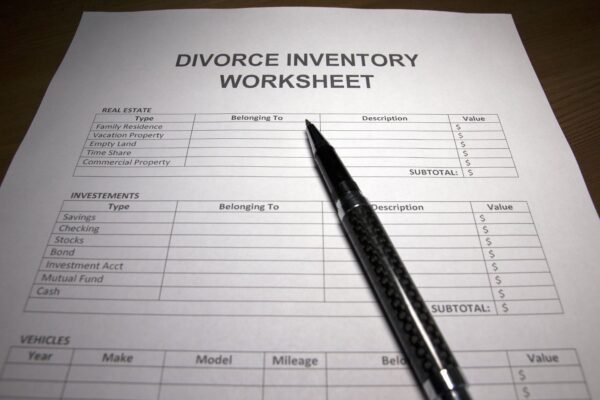
E is for everything else, which can cover a wide range of issues, from refinancing a home, to handling issues of credit card or other debt, making sure that liabilities, and deeds are changed as appropriate, depending on what your desire and ultimate agreement is between the two of you. This section also takes into consideration the division of your furnishings and how to operate emotionally and financially while in the divorce process. Health insurance, life insurance, the need for new wills etc., are often discussed, and anything else that concerns you.
We start with a complimentary call with you for 15 minutes. I like to know in advance that you and your spouse are good for the mediation process. I’ll also have a call with your spouse. Then if you are comfortable, we will proceed with an initial consultation in my office where we will begin to discuss the specifics of what you would like me to help you with.
My goal is to be as expeditious as possible while not rushing anyone and while paying attention to the details that are important to you. Mediation is typically the least expensive and most rewarding alternative to a litigated divorce. Unless your situation involved domestic violence or child abuse, everything can generally be managed in mediation, but couples have the opportunity to have an attorney assist them in the mediation process if they prefer. I look forward to helping you and your family.
Video Transcript:
Freya Robbins: You asked me about the P.E.A.C.E. acronym. The P.E.A.C.E. acronym, the P stands for parenting, so if you are a couple that has children, you’re going to want to know about the parenting issues. Every couple who has a child that’s a minor, that’s under the age of 18 and has not graduated from high school, has to take a parenting course. It’s a four-hour course. You must take it. I know we think, “We’ve had kids. We have grown kids. I certainly don’t need someone telling me how to be a parent.” But it is a requirement of the courts.
You have to complete a parenting plan, and that parenting plan talks about who’s going to pay for the children’s expenses? Who makes decisions about them enrolling them in school? Things like, can you take them on vacation? Who pays for unreimbursed medical expenses? Before and after school activities? Who’s having them on Martin Luther King, Jr. holiday? Who’s having them for Christmas this year? Things we don’t even think about. What about spring break? Maybe you have someone who has been raised or has some international connections. Can I take them out of the state? Can I take them out of the country? I always remind people we live in Florida. Atlanta is another state. It’s like, “Hey, can I take them out of state?” Sure. “Well, we just went to Atlanta.” No, you can’t do that. You can’t move minor children out of the area without the permission of the other parent, which has to be in writing and notarized, or an order of the court. So understand that. That’s the P, right?
E is equitable distribution. Florida is an equitable distribution state. The law or the statutes say that you must divide equitably everything that you have accumulated during the course of your marriage. Marital money gets added up and divided. If a judge has to make a decision, he or she will say 50/50. In the eyes of the law, 50/50 is what is considered equitable. In mediation, you have some flexibility. It doesn’t have to be exactly that, but it still has to be fair. Okay?
A would be alimony in this case, and that’s support, one party to another. Yes, men, women have paid alimony, too. It’s not just the men that have to pay alimony. But alimony is still a consideration in the state of Florida, and alimony, oftentimes, is insured as well. So if you’re paying alimony, we would want to have some way to ensure that in the event that someone passed.
C is for child support. Again, if there are minor children, there is a child support calculation that is a formula. The state has a formula. We put certain information in there, like who pays for their medical insurance, who pays for any kind of childcare. That’s calculated in there based on the number of children, the number of overnights, and then the net income of the parties. It all shakes out. It’s a magical number.
And then we have E. E stands for everything else. Everything else is like, who gets the sofa? We have two kayaks. Do we split them? What about the TV? What about all the other things that we have? We might have to divide a pension plan. There might be a QUADRO required for that, which is a Qualified Domestic Relations Order. The everything else is how do these things get divided? Do we need to change titles? Refinance? Many, many, many other things need to be considered in the process to make sure that you’re doing it in a way that is proper.